Zirconia Crown
Kostenlose Diagnose
PATIENTENBE WERTUNGEN
-
 Trustpilot 320 Excellent
-
 Google 214 Reviews
-
 Alan MitchellWow!! Dr Emre and his team are fantastic! They put me at ease from day one, explained everything in detail. So professional and efficient. I highly recommend them to all my friends and family
 -
Dariusz WnukI came to Dentarma Clinic for All on 6 as I had a lot treatments done on my teeths, now they were damaged and many of them was missing. I am so happy now, everything done in less than week. All staff really kind and helpful. Professors and Doctors are amazing in their job. My new smile - 12... +More
-
JamieDentarma was amazing from start to finish. The staff were welcoming and made myself feel comfortable. I recommend if wanting to get your teeth done to come to Dentarma.
-
Ege su YeşildağMy experience at Dentarma Clinic surpassed all expectations. Başak Şeker and Emre Şeker are true masters of their craft. Their expertise and skill in performing my implant treatment were truly impressive. What truly sets Dentarma Clinic apart is their personalized approach; they took the time to... +More
-
Charmaine FowkeMy experience was 5 star with dentarma from start to finish .Dentrama has made a big difference to my confidence.From my very first watsapp to my final appointment was very well planned and all the staff were fantastic and very helpful the professor is the best and makes sure everything is 5star... +More
-
Gary SpoonerWhere to start!!! MUST READ!! Absolutely amazing, could be one way. From my first interaction with DentArma they explained everything so clearly, made me feel at ease and supported me throughout the process. I went to a consultation in Newcastle, previous experiences with dentists in the UK... +More
-
Bethan WilliamsI can not speak highly enough about Dentarma. Both me and my partner had implants and zirconium crowns. From the very first conversation we had from Luiza to our initial meeting at the clinic, was so informative and professional and this remained throughout all our visits. The clinic is spotlessly... +More
-
Mihaela ancuta Silicaa week ago, I went to the clinic where I had the pleasure of meeting the best implantologist and a wonderful team, they treated me with great care, I didn't feel anything, no pain, I'm very happy, I recommend you with confidence
-
Sukhi DhaliwalFantastic experience, friendly and approachable staff. Made me feel so welcome even though I was so nervous. Clean and hygienic clinic in a very convenient location.
-
Charlie YustFirst thing stands out about Prof. Emre Şeker besides his skills is his personality, what a sweet gentleman! I live in United States and go to dentist often and when I encounter him with the dentists in US, couldn’t even come up with an answer. The equipment he uses I’ve never seen before, very... +More
KOSTENLOSE BERATUNGANFRAGE
Zirconia Crown
.
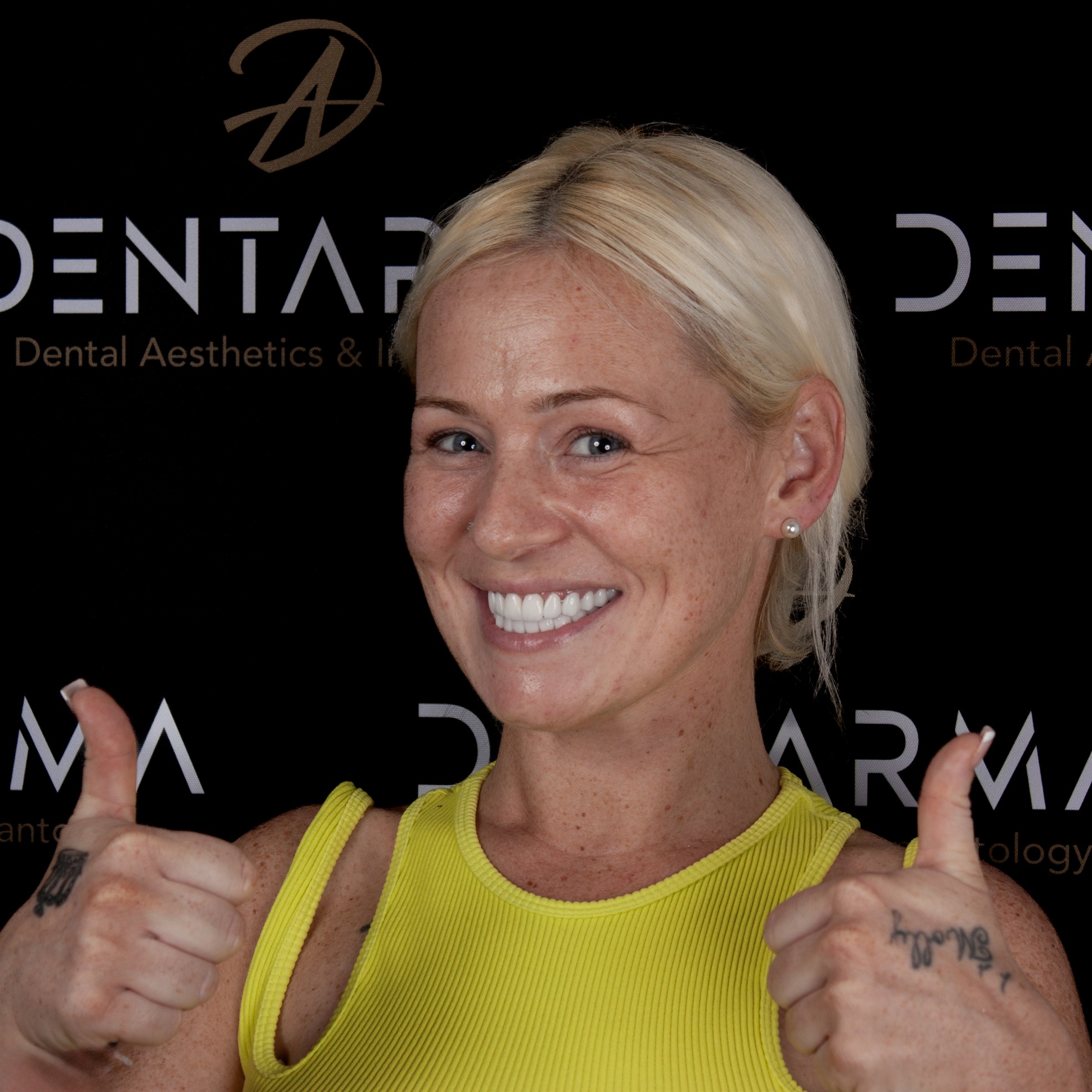
Zahnkronen werden verwendet, um einen Zahn oder ein Zahnimplantat zu bedecken. Zahnärzte verwenden Kronen häufig, um gebrochene, schwache oder verformte Zähne zu stützen. Darüber hinaus können Zahnkronen verwendet werden, um stark abgenutzte oder verfärbte Zähne zu bedecken. Sie können auch mit Brücken verwendet werden, um mehrere Zähne zu stärken.
Bei den für Kronen verwendeten Materialien gibt es mehrere Optionen, darunter Keramik und Metall. Eine weitere Option ist die Zirkoniumbeschichtung. Obwohl Zirkoniumkronen als eine Art Keramikkrone klassifiziert werden, werden sie aus Zirkoniumdioxid hergestellt, einem äußerst haltbaren Metall, das mit Titan verwandt ist.
Was ist eine Zahnkrone?
Zahnkronen sind Restaurationen, mit denen Form, Größe und Aussehen eines Zahns wiederhergestellt werden. Wenn Füllungen das Problem nicht lösen, bieten Kronen auf beschädigten Zähnen Schutz. Kronen können aus Materialien wie Metall, Porzellan, Harz und Keramik hergestellt werden und erfordern außer einer regelmäßigen und angemessenen Mundhygiene keine besondere Pflege.
Kronen werden normalerweise in einer zahnfarbenen Farbe hergestellt, die den natürlichen Zähnen entspricht. Bei der Auswahl des Materials für die Zahnkrone werden individuelle Faktoren wie die Position und Funktion des Zahns, die Position des Zahnfleischgewebes, die Anzahl der beim Lächeln sichtbaren Zähne und die Farbe der umliegenden Zähne berücksichtigt.
Mit der Zeit können Zähne durch Karies, Verletzungen oder Abnutzung ihre Form verlieren oder beschädigt werden. Eine Zahnkrone wird über den Zahn gesetzt, um den sichtbaren Teil abzudecken. Kronen schützen Zähne vor Brüchen und sind eine effektive Methode, um verlorenes ästhetisches Aussehen und Funktion wiederherzustellen.
Welche Arten von Zahnkronen gibt es?
Es gibt verschiedene Arten von Zahnkronen, darunter Gold, Porzellan, Metall-Porzellan (PFM), Zirkonium und E-Max (Lithiumdisilikat).
Goldkronen: Zahnkronen aus Gold, die aus Kombinationen anderer Metalle wie Kupfer, Nickel oder Chrom bestehen, sind äußerst langlebig und stabil. Aus ästhetischen Gründen werden sie heute jedoch nur noch selten eingesetzt.
Porzellankronen: Dies ist heute die am häufigsten verwendete Kronenart. Diese Kronen sind vollständig aus Porzellan gefertigt und bieten das beste und natürlichste Aussehen. Sie passen sich in Form, Größe und Farbe den umliegenden Zähnen an. Porzellankronen sind biokompatibel und gelten als die beste Option für die Restauration von Frontzähnen. Sie sind ungiftig, da sie kein Metall enthalten. Damit Porzellankronen jedoch lange halten, ist eine ordnungsgemäße Pflege unerlässlich.
Metallkeramikkronen (PFM): Eine weitere häufig verwendete Art von Zahnkronen sind Metallkeramikkronen. Diese Kronen sind aufgrund ihres Metallanteils robust und aufgrund ihrer Porzellanbeschichtung ästhetisch ansprechend. Das Metall in Metallkeramikkronen kann jedoch dazu führen, dass sich am Zahnfleischrand eine graue Linie bildet.
E-Max-Kronen (Lithiumdisilikat): Dies ist der neueste Kronentyp, der heute verwendet wird. Sie bestehen aus Lithiumdisilikat, sind robust und langlebig und bieten gleichzeitig ein äußerst ästhetisches Erscheinungsbild. Sie gelten als ausgezeichnete Wahl sowohl für Vorder- als auch für Hinterzähne.
Zirconium Crowns: Zirconium is a relatively new material that combines the strength of metal with the aesthetics of porcelain crowns. High-translucent zirconium and layered zirconium crowns are increasingly being used. Zirconium crowns provide excellent aesthetics, strength, and durability. They are less prone to wear and do not contain metal, reducing the risk of allergic reactions.
Zirconium, traditional gray metal that was conventionally used in classic metal-supported crowns and bridge prostheses, has recently been increasingly replaced by a white alloy called zirconium. Zirconium is highly durable and corrosion-resistant, unlike metals, making it widely used in dentistry, particularly in crowns and bridges.
What is Zirconium Tooth?
Zirconium is a natural material that is highly resistant, non-allergenic, preserves color integrity, and eliminates hot-cold sensitivity, making it frequently used in aesthetic and prosthetic treatments in recent years. Being both durable and aesthetic, zirconium is used to cover tooth surfaces, a process known as zirconium tooth coating.
Also known as crowns or caps, zirconium tooth coating is quite popular because it enables aesthetic prosthetic treatments. Being permeable and durable, zirconium provides advantages with its white color, ensuring access to white teeth and aesthetic smiles after the restoration of decayed teeth.
How is Zirconium Tooth Made?
Zirconium dental crowns are made from zirconium dioxide, a white ceramic material. Due to its ceramic properties and being milled from a single block, it possesses the characteristic of being a strong dental prosthesis. Zirconium crowns can be produced thinner than those made from strong metals.
Creating a strong but thin crown is considered ideal as it requires minimal removal of healthy dental tissue for placement. The aim is always to preserve natural teeth and healthy smiles for as long as possible.
The process of dental restoration using zirconium is completed in two stages. During the first appointment, the dentist removes unhealthy tissue, shapes the tooth to accommodate the crown, and minimally removes healthy tissue depending on the tooth's health.
Then, impressions are taken from the patient, and a temporary crown is placed to protect the shaped tooth. Using these impressions, the exact size and shape of the new dental crown are determined.
After the zirconium coating is prepared, the temporary crown is removed, and the area is cleaned to prepare for the dental procedure. The zirconium crown is then cemented onto the tooth, and minor adjustments are made if necessary.
How is it Used with Digital Workflow?
The dental industry is undergoing a unique transformation with the active use of scanning, CAD/CAM, and stereolithography processes. These processes play a significant role in increasing the efficiency of dentists and providing access to a wide range of solutions and materials.
In digital workflows, information obtained analogically needs to be converted into digital format. A laboratory scanner is used to perform this conversion.
With the use of digital workflows, the treatment outcome can be shared with the patient at the beginning of the treatment, allowing them to visualize the results. Photographs of the patient are taken, and their needs are determined.
Designs are made according to the patient's expectations, ensuring a natural and aesthetic appearance. After the design is created, it is printed out using a 3D printer and applied to the patient's mouth as a demo. This allows the patient to see the expected result in three dimensions.
Plastic prints of the patient's own dental model are obtained from 3D printers in the same dimensions as the future veneers and zirconium coatings to be applied.
After being applied to the patient's mouth, photographs are taken again and compared with the design. After necessary adjustments, the design is sent to 3D printers or CAD/CAM devices for production. Since production will be done on CAD/CAM devices, porcelain or zirconium blocks are required.
What is CAD/CAM?
CAD/CAM, which stands for computer-aided design and computer-aided manufacturing, is specialized software used in dental design and production. It enables the entire process from scanning the patient's mouth to producing the prosthesis.
Is There a Difference Between Zirconium Crowns and Zirconium Tooth Coating?
Crown and tooth coating are terms used interchangeably by the public; there is no difference between them.
What are the Advantages of Zirconium?
Zirconium is becoming increasingly popular in the medical field due to its properties. The human body does not reject zirconium. Therefore, the likelihood of infection, complications, pain, and allergic reactions is reduced. It is more effective than porcelain in covering dental damage caused by staining or fractures. It is strong enough to withstand the most vigorous biting and chewing activities.
It is resistant to extreme temperatures and resistant to crumbling and cracking, making it durable. It can be easily shaped, colored, and sized to match the patient's natural teeth. It can be applied by removing a thin layer from the tooth. Its semi-transparent, clear appearance ensures the most suitable match to the patient's natural tooth color.
What are the Disadvantages or Risks of Zirconium?
The disadvantages of zirconium coating are minimal. It is not suitable for use when there are adjacent and numerous missing teeth. Moreover, it is more expensive than metal-supported coatings when considered in terms of cost.
Zirconium, it can be preferred in a variety of situations in dental aesthetics and restoration:
- Discoloration and Yellowing of Teeth: Zirconium coatings can be preferred to correct color changes in teeth. The natural white color of zirconium provides a whiter and more aesthetic appearance to the teeth.
- Behandlung von Zahnlücken : Mit Zirkoniumbeschichtungen können Zahnlücken geschlossen werden und so ein ästhetisches Lächeln erzielt werden.
- Unregelmäßige Zahnstruktur : Zirkoniumbeschichtungen können bevorzugt werden, um die Form der Zähne zu korrigieren und die Zahnausrichtung zu verbessern.
- Verlust der ästhetischen Eigenschaften von Füllungen : In Fällen, in denen Metallfüllungen sichtbar sind oder alte Füllungen ihre Farbe verändern, können Zirkonbeschichtungen eine ästhetische Lösung bieten.
- Beschichtungsbehandlung für Backenzähne : Zirkoniumbeschichtungen können eine langlebige und ästhetische Option für Restaurationen an Backenzähnen sein.
- Ästhetische Behandlung des Lächelns : Insgesamt können Zirkoniumbeschichtungen bevorzugt werden, um die Gesamtästhetik des Lächelns zu verbessern.
Zirkoniumbeschichtungen können von jedem erhalten werden, der das 18. Lebensjahr vollendet hat und über ausgebildete Zahn- und Kieferstrukturen verfügt. Personen mit Gewohnheiten wie Zähneknirschen oder Kauen harter Gegenstände müssen diese Probleme jedoch möglicherweise angehen, bevor sie sich einer Zirkoniumbeschichtung unterziehen.
Die Farbe der mit Zirkonium zu beschichtenden Zähne sollte der aktuellen Zahnfarbe des Patienten entsprechen. Daher werden Zirkoniumbeschichtungen ausgewählt, die mit der natürlichen Zahnfarbe kompatibel sind. Bei der Bestimmung der Zahnfarbe werden die Zähne gereinigt und poliert, um ihre natürliche Farbe freizulegen.
Zahnbeschichtungen können mit verschiedenen Materialien durchgeführt werden. Zu diesen Materialien gehören Porzellan mit Metallrücken, Porzellan mit Zirkoniumrücken, Verbundlaminatfurnier, Vollkeramik-Empress und Porzellanlaminatfurnier. Die Wahl des zu verwendenden Typs richtet sich nach den Bedürfnissen des Patienten, der Zahnstruktur und den ästhetischen Vorlieben.
Zirkonium-Modelle
Es gibt verschiedene Arten von Zirkoniumzähnen, die bei Veneer-Anwendungen, All-on-Four-Implantatanwendungen, implantatgestützten Anwendungen und Smile-Design-Anwendungen verwendet werden. Darüber hinaus kann bei der Behandlung einzelner Zahnbeschichtungen eine Zirkoniumbeschichtung bevorzugt werden.
Sind alle Zirkonzähne von gleicher Qualität?
Zirkonium wird in der Zahnheilkunde häufig verwendet, es ist jedoch wichtig, bei der Anwendung von der Weltgesundheitsorganisation zugelassene Zirkoniumblöcke zu verwenden. Die Verwendung minderwertiger Zirkoniumblöcke kann zu negativen Auswirkungen auf die Gesundheit des Patienten führen.
Gibt es einen Qualitätsunterschied zwischen Zirkoniumblöcken?
Zirkoniumblöcke können von verschiedenen Marken in unterschiedlicher Qualität hergestellt werden. Um die gesündesten und effektivsten Ergebnisse zu erzielen, sollte sorgfältig vorgegangen werden, um sicherzustellen, dass von der WHO zugelassene Zirkoniumblöcke verwendet werden.
Qualitäts- und Preisverhältnis bei Zirkonzähnen
Zirkonium ist eines der hochwertigsten Materialien, die in der Zahnmedizin verwendet werden. Die Preise für Zirkonium können je nach Faktoren wie der Qualität des Materials variieren. Eine höhere Qualität führt zu einem höheren Preis.
Vollkeramikveneers
Follow Us
-
 YOUTUBE
 -
 Location
 -
 Facebook
 -
 instagram